Home | Veterans | Phillip Govett
Philip-Govett

A veteran interview with

Phillip Govett

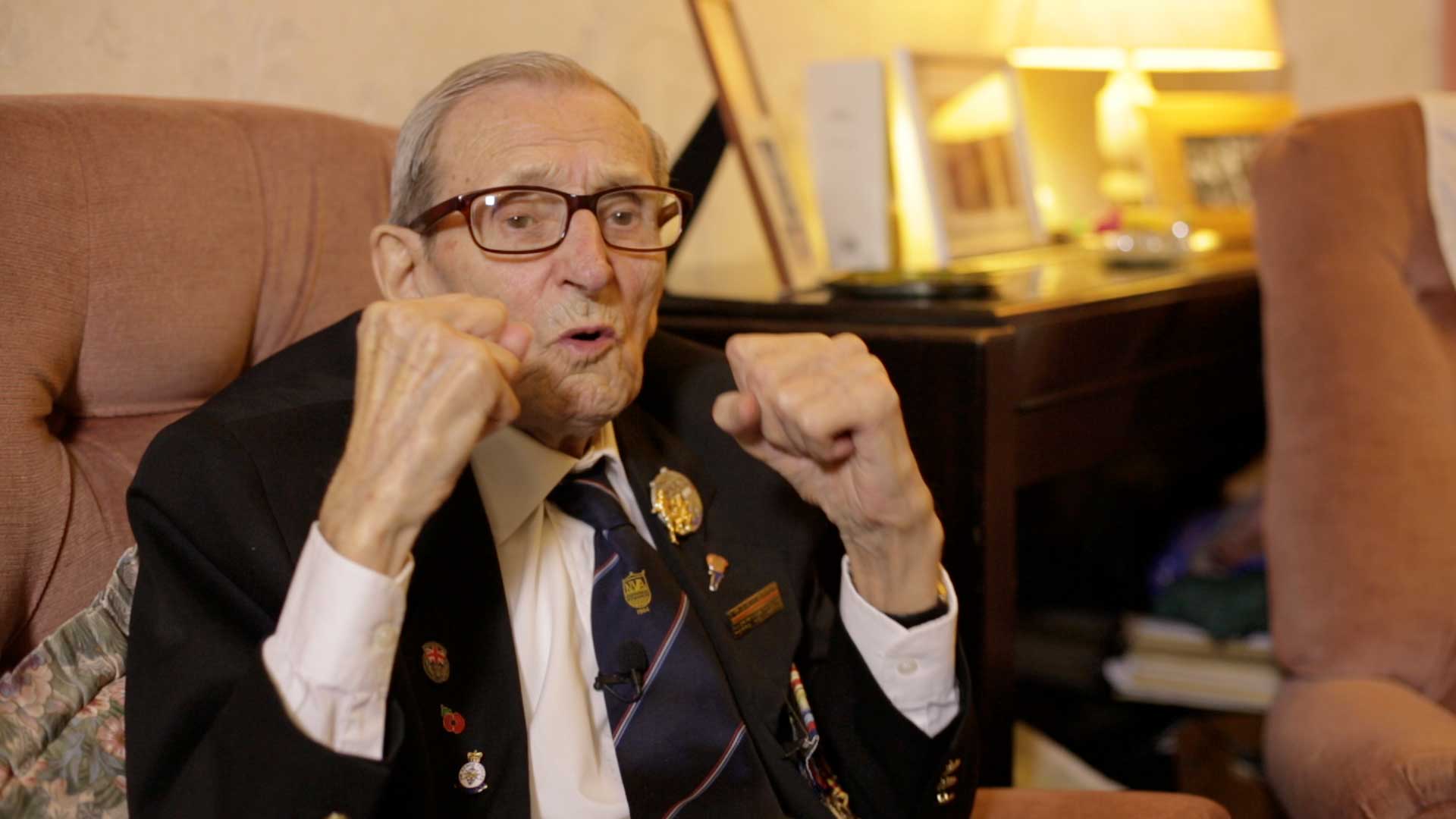
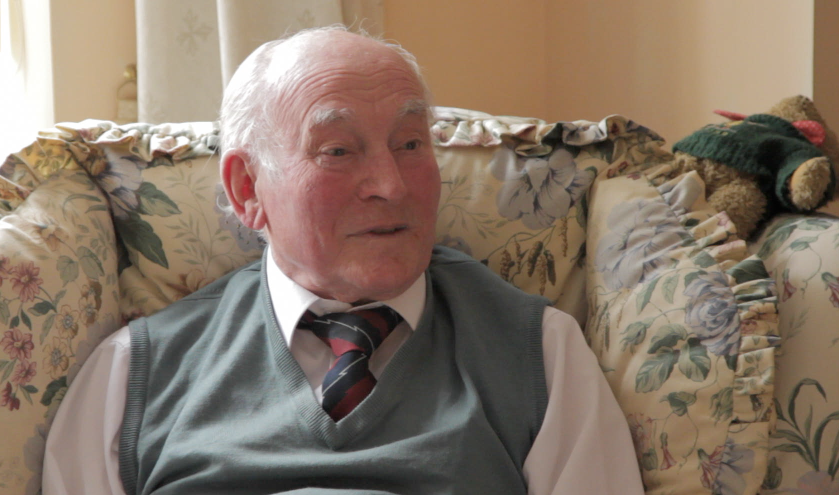
Phillip Govett served with the 117 Pioneer Company. He went through France, Belgium and Holland looking after the various supply depots
Play video
Watch the interview

Bringing military history to life

Help us tell this veteran's story!

About Phillip Govett

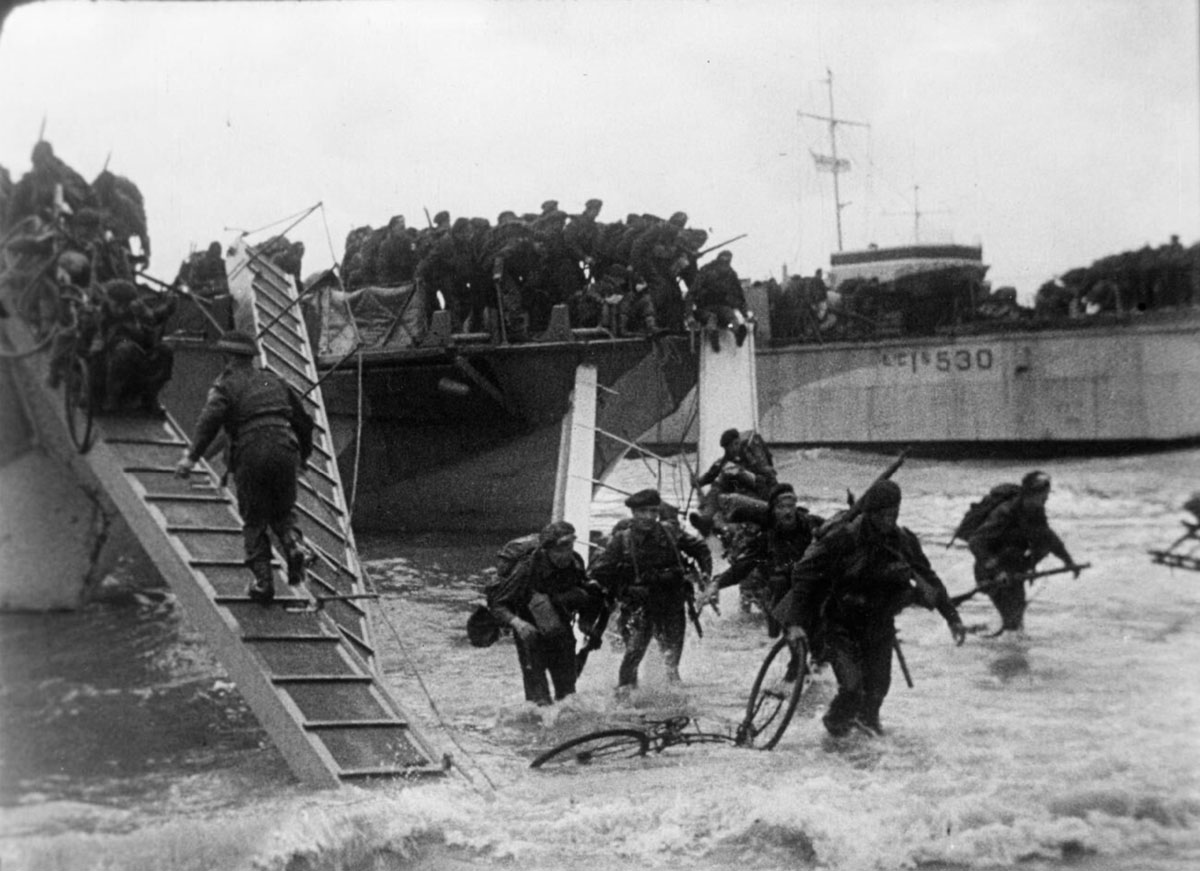
Phillip Govett served with the 117 Pioneer Company. He landed in Normandy on D plus 6 and moved through France, Belgium, and Holland. His main duties included supporting command supply depots (CSDs), prisoner of war camps, and providing supplies like ammunition and water.

The unit experienced a rough time outside of Caen and had to dig in. They faced the dangers of mines, with one sergeant being severely injured by a booby trap. Phillip’s company waited to move up, but the advance was delayed due to the fighting at Caen. Phillip’s journey took him near the German-Holland border, where they were in a forward area of a prisoner of war camp holding thousands of German prisoners.

Credits

Interviewed by:
Brig. C Elderton
Reviewed by:
Atiyyah Afzal
Transcribed by:
Fiona Marshall

Transcripts:
Please note that transcripts and closed captions in the video player are automatically generated by Vimeo.

If you would like a version of the transcript that has been transcribed manually by Fiona Marshall, please complete this form or email info@legasee.org.uk.

Copyright:
All video content, web site design, graphics, images (including submitted content), text, the selection and arrangement thereof, underlying source code, software and all other material on this Web site are the copyright of Legasee Educational Trust, and its affiliates, or their content and technology providers. ALL RIGHTS RESERVED. Any use of materials on this Web site – including reproduction for purposes other than those noted above, modification, distribution, or republication – without the prior written permission of Legasee Educational Trust is strictly prohibited.

Home | Veterans | Phillip Govett

A veteran interview with

Phillip Govett

Philip-Govett

Phillip Govett served with the 117 Pioneer Company. He went through France, Belgium and Holland looking after the various supply depots
Related topics & talking points

Keep on watching

More veteran stories...

Share this interview on:

https://www.legasee.org.uk/veteran/philip-govett/

Cite this interview:

MLA Style:
Govett, Phillip. A Veteran Interview with Phillip Govett. Interview by Brig. C Elderton. Legasee, n.d. https://www.legasee.org.uk/veteran/philip-govett/. Accessed 15 Jan. 2026.
APA Style:
Govett, P. (n.d.). A Veteran Interview with Phillip Govett [Interview by Brig. C Elderton]. Legasee. Retrieved January 15, 2026, from https://www.legasee.org.uk/veteran/philip-govett/
Chicago Style:
Govett, Phillip. n.d.. A Veteran Interview with Phillip Govett. Interview by Brig. C Elderton. Legasee. Accessed January 15, 2026. https://www.legasee.org.uk/veteran/philip-govett/
Harvard Style:
Govett, P. (n.d.). A Veteran Interview with Phillip Govett. [Interviewed by Brig. C Elderton]. Legasee. Available at https://www.legasee.org.uk/veteran/philip-govett/ (Accessed: 15 January 2026)
Vancouver Style:
Govett, P. A Veteran Interview with Phillip Govett [Internet]. Interview by B. Elderton. Legasee; n.d. [cited 2026 Jan 15]. Available from: https://www.legasee.org.uk/veteran/philip-govett/
An interview with

Geoff Holland

From Manchester joiner to military hero who served in the British Royal Artillery during the Korean War.

Geoff Holland offers an insightful picture of his service in the British Royal Artillery during the Korean War. At the age of eighteen he was already working in trade as an apprentice joiner in Manchester which delayed his enlistment into National Service until 1950 on his 21st birthday. Following his army training at the Royal Artillery Barracks in Woolwich, he was sent to Hong Kong to continue in preparation for Korea. Unfortunately, it was during this period when he received a letter from his fiancée, saying they were breaking up. Soon after, the regiment sailed to Pusan aboard the Empire Orwell (an ex-German liner). Upon arrival, he recalls many unpleasantries on his way to camp. From the scent of human excrement in the paddy fields (putting him off rice) to a turbulent trip on a rattle train with repulsive conditions. His main duties in Korea consisted of carrying ammunition and operating 4-inch mortars which were used to assist the infantry in their push against the Chinese and North Koreans. As a soldier who received limited information, Geoff remained oblivious to certain things such as the exact location of the British infantry despite needing to know the position and range of a mortar before firing. The regiment was fighting in the Battle of the Hook but at the time, Geoff was unaware regarding the significance of his location. He recalls the foulness of his living conditions; no showers or sanitation, facing swarms of rats in the winter followed by the threat of disease by mosquitos in the summer and the constant banging of artillery above. However, he managed to show practicality by improving the warmth of his bed, using newspapers received from his mother for insulation. Many figures stood out in his memory from Korean troops who helped with carrying ammunition and cleaning clothes to a young Scotsman who struggled mentally after his girlfriend had left him. Despite the adversity he faced, Geoff enjoyed his time in Korea despite speaking little of it and though he received no welcome ceremony upon his return to England, in the years that followed he remembers meeting former infantry men from the war who thanked soldiers like him graciously for their support. Geoff's interview discloses the substantial contributions of those serving in the Royal Artillery who lived in the dark while supporting the infantry and reveals the tragedy of personal relationships that befell those who were sent far away to serve in the Korean War.
Service:
Interviewed by:
Martin Bisiker
An interview with

Ann Forbes

Born and raised in Sheffield, Yorkshire, Ann had a practical streak and a good sense of adventure. In the late 1930s, after reading about the First Aid Nursing Yeomanry (FANY) in a Territorial Army magazine, she and her close friend Lois Ragg decided to join. The organisation appealed to her — hands-on, disciplined, and useful. She trained in map reading, engine maintenance, and gas attack procedures, and took part in pre-war camps, one memorably inspected by Princess Alice. When war broke out, Ann was called up to Northern Command in York, later serving with the 2nd Air Cavalry Division near Nottingham. When the FANY became part of the Auxiliary Territorial Service (ATS), she stayed on, completing officer training in Edinburgh and earning her commission. Her wartime service took her across Britain, from northern headquarters to the southern coast, including a key posting in Dorset where she managed transport and logistics for anti-aircraft units, a demanding job she handled with steady efficiency. Later, she transferred to the Education Corps before her discharge in 1945. After the war, Ann’s resourcefulness found a new outlet. She co-founded Decor Studios Limited in London, producing lampshades at a time when the city was rebuilding and reinventing itself. She later married and settled into family life, carrying with her the same calm capability and sense of purpose that had defined her service years. The publication of this previously unseen interview was made possible thanks to a grant from The Gerry Holdsworth Special Forces Charity, to mark 80 years since the closure of the Special Operations Executive (SOE) in January 1946. 
Photo Gallery icon 19 Photos
Service:
Interviewed by:
Martyn Cox
An interview with

Fiona Shakspeare

A lance sergeant of the Grenadier Guards remembers her 20-year career as a military musician serving abroad and in the UK.

With a childhood love of music and a military family background, a career in an army band was a natural choice for Fiona Shakspeare. After completing basic training she went to Kneller Hall, and she shares memories of her days as a student, including time spent perfecting her skills as a bassoonist and enduring her much-hated signing lessons. After Kneller Hall, Fiona’s first posting was to the Hussars and Light Dragoons, and her subsequent career took her to Kosovo, Germany and Iraq. She talks about the dual role of musician and soldier, describing what it was like to serve in a conflict zone, what her duties entailed, and why music still has its place in war. After her time abroad, Fiona was posted first to the Prince of Wales Division Band and then the Grenadier Guards. She talks about two of the greatest highlights of her career: playing in the Falkland Islands for the 25th anniversary of the conflict, and Trooping the Colour. At the time of her interview, Fiona was serving the final 12 months of her military career as Assistant Corp Secretary at Kneller Hall, and it’s easy to believe her when she says joining the army as a musician was the best decision she’s ever made.
Service: