Home | Veterans | Tony Gibbons
Tony-Gibbons

A veteran interview with

Tony Gibbons

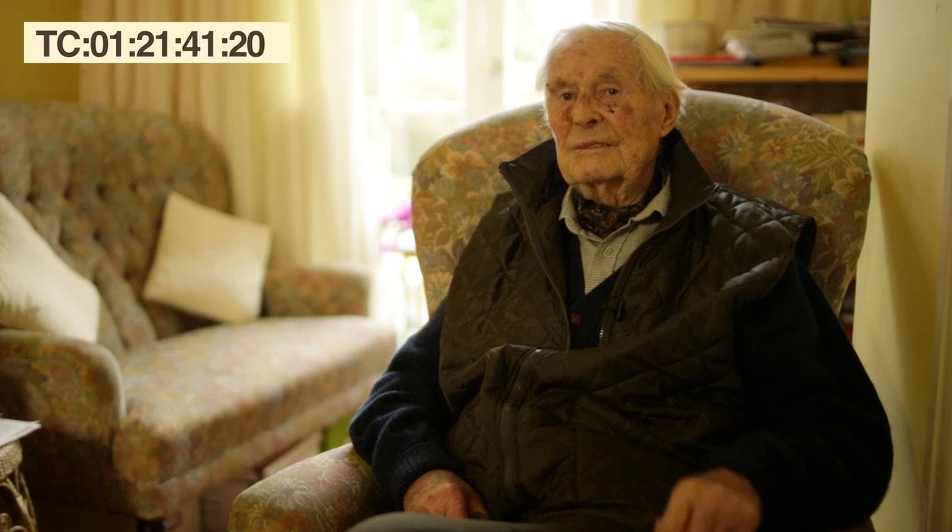
Tony Gibbons joined the Royal Marines in 1942. He provides som excellent detail about the role of his Landing Craft during the Normandy campaign.

Video Coming Soon

Bringing military history to life

Help us tell this veteran's story!

About Tony Gibbons

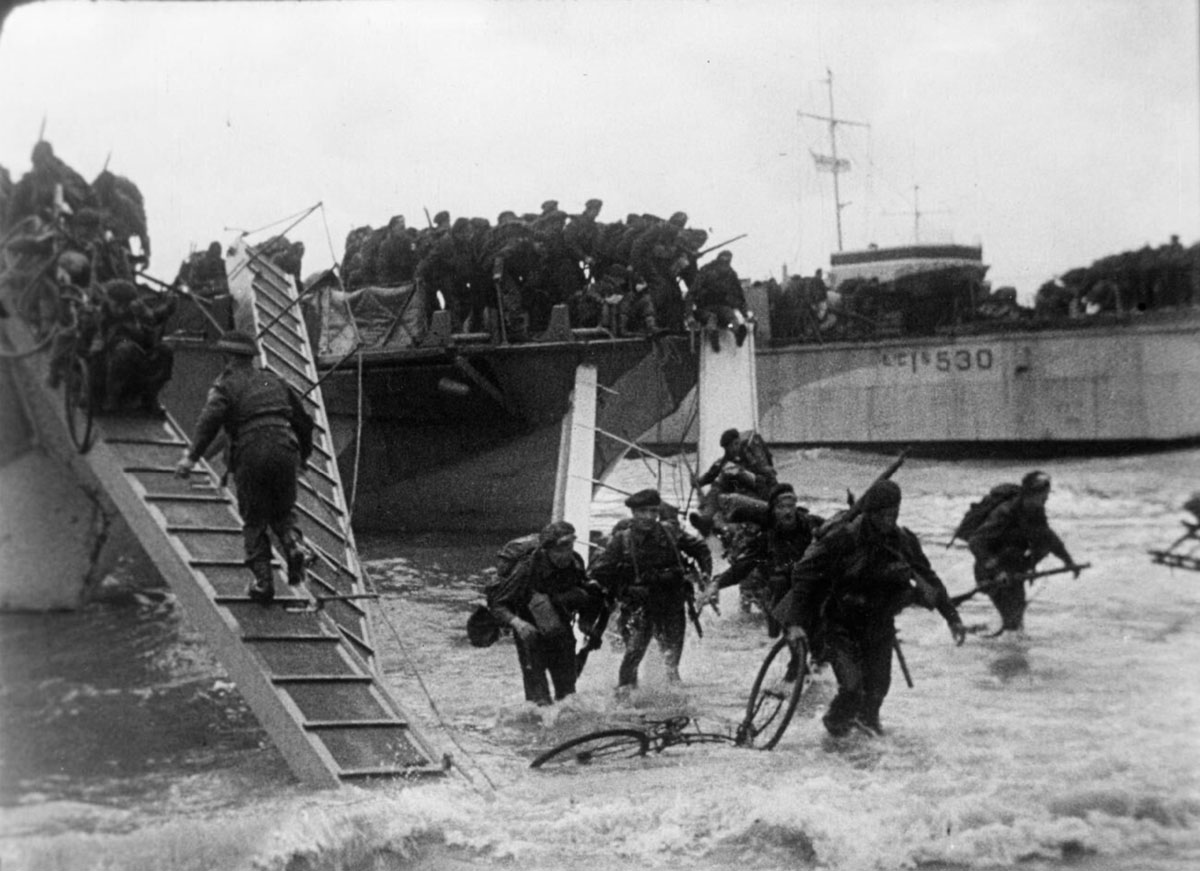
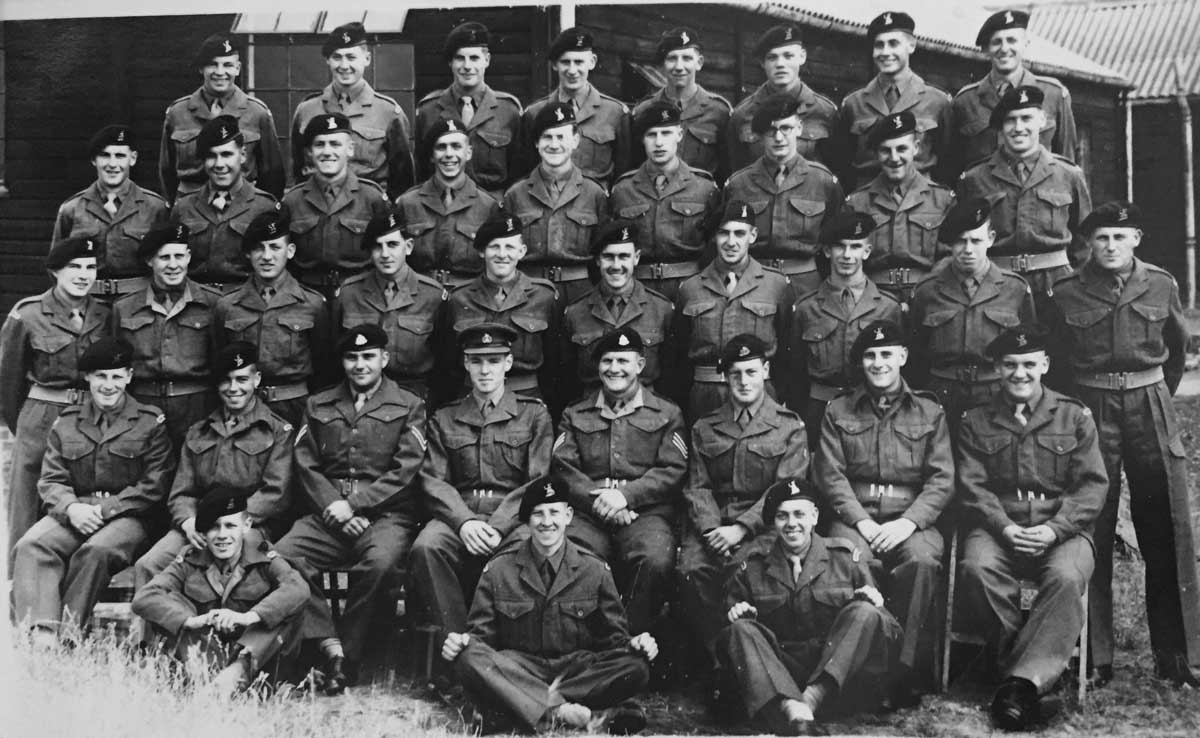
Tony Gibbons recalls, often with humour, his service as a landing craft stoker. He wanted to join the Navy in 1942 but was persuaded by the recruiting office to join the Royal Marines “because they also go to sea”. After training in Kent, his landing craft transferred troops from the larger parent ships to shore and recovered casualties off Gold Beach (Arromanches) from D Day.

In a highly personal account, he relates anecdotes: how the troops were soaked with spray, heavy guns firing over his head, calmer seas once the Mulberry Harbour was built and the safe lanes cleared by beach parties. More soberly, he remembers having to handle casualties and dead bodies, or removing a cable that had fouled the propeller. Then the humour that got him and his mates through returns when he remembers his landing craft being used to ferry senior officers between ships for dinner or drinks, while the guns were firing overhead.

Credits

Interviewed by:
Brig. C Elderton
Reviewed by:
Andy Voase

Transcripts:
Please note that transcripts and closed captions in the video player are automatically generated by Vimeo.

Copyright:
All video content, web site design, graphics, images (including submitted content), text, the selection and arrangement thereof, underlying source code, software and all other material on this Web site are the copyright of Legasee Educational Trust, and its affiliates, or their content and technology providers. ALL RIGHTS RESERVED. Any use of materials on this Web site – including reproduction for purposes other than those noted above, modification, distribution, or republication – without the prior written permission of Legasee Educational Trust is strictly prohibited.

Home | Veterans | Tony Gibbons

A veteran interview with

Tony Gibbons

Tony-Gibbons

Tony Gibbons joined the Royal Marines in 1942. He provides som excellent detail about the role of his Landing Craft during the Normandy campaign.
Related topics & talking points

Veteran gallery

Photos & memories

Keep on watching

More veteran stories...

Share this interview on:

https://www.legasee.org.uk/veteran/tony-gibbons/

Cite this interview:

MLA Style:
Gibbons, Tony. A Veteran Interview with Tony Gibbons. Interview by Brig. C Elderton. Legasee, n.d. https://www.legasee.org.uk/veteran/tony-gibbons/. Accessed 17 Nov. 2025.
APA Style:
Gibbons, T. (n.d.). A Veteran Interview with Tony Gibbons [Interview by Brig. C Elderton]. Legasee. Retrieved November 17, 2025, from https://www.legasee.org.uk/veteran/tony-gibbons/
Chicago Style:
Gibbons, Tony. n.d.. A Veteran Interview with Tony Gibbons. Interview by Brig. C Elderton. Legasee. Accessed November 17, 2025. https://www.legasee.org.uk/veteran/tony-gibbons/
Harvard Style:
Gibbons, T. (n.d.). A Veteran Interview with Tony Gibbons. [Interviewed by Brig. C Elderton]. Legasee. Available at https://www.legasee.org.uk/veteran/tony-gibbons/ (Accessed: 17 November 2025)
Vancouver Style:
Gibbons, T. A Veteran Interview with Tony Gibbons [Internet]. Interview by B. Elderton. Legasee; n.d. [cited 2025 Nov 17]. Available from: https://www.legasee.org.uk/veteran/tony-gibbons/
An interview with

Vic Ould

A WWII radar operator gives a fascinating account of his life and work aboard destroyer HMS Carron.

After joining the Navy in 1943 and completing his training at stone frigates HMS Royal Arthur, HMS Scotia and HMS Ganges, able seaman Vic Ould was sent to Chatham Barracks to wait for his first draft. This came in the form of HMS Carron, a brand-new ship in Greenock, Scotland, who first set sail in the dead of night to evade any U-boats lurking nearby hoping for an easy catch. Vic shares details of the many escort missions the Carron undertook in the Arctic and Atlantic Convoys, and talks about the job of a destroyer and how its crew enables it to operate effectively. He also recalls details about his role as a radar operator, and reflects on the end of his military service in Indonesia. Vic – who became a prolific writer who penned several fascinating ‘first-person accounts’ from sailors aboard other destroyers – shares his story with humour, humility and an eye for detail that brings his memories vividly to life.
Photo Gallery icon 3 Photos
Service:
Interviewed by:
Martin Bisiker
An interview with

Alex Owens

Able seaman Alex Owens remembers his Naval service during WWII, providing protection for the fleet aboard S-class destroyer HMS Savage.

Alex talks about the first strict days of his Naval training at the shore station of HMS Ganges in Ipswich, and the even stricter regime that followed at Chatham Barracks, recalling the general attitude amongst his peers of ‘just getting on with’ whatever they had to do. His first draft as an ordinary seaman was to HMS Savage, a brand-new ship which he was one of the first to board. Unfortunately for Alex, as soon as he left the shore for the very first time, he was laid low by seasickness which took a fortnight to get over and left him temporarily unable to care if the ship sank or sailed! Alex shares stories from his time on the Russian convoys and the unimaginable hardships the crews endured. He also details close contact with the SS Penelope Barker, as well as Savage’s heroic role in the sinking of the German battleship Scharnhorst: an amazing account made even more incredible when he remembers the moment the Savage turned her guns in the wrong direction… A charming, generous and funny man, Alex’s story is that of a young sailor at sea determined to do his bit, regardless of the dangers and fears he encountered along the way.
Photo Gallery icon 7 Photos
An interview with

Patricia Parker

A Wren from Kent reflects on her military service during WWII, including her memories of D-Day and VE Day.

When Patricia Parker turned 18, two years after the Second World War had begun, she was eager to do her bit, and as soon as she was called up she joined the WRNS (Women’s Royal Naval Service). After completing her training in Kent, Patricia was sent to HMS Ceres in Wetherby, Yorkshire, where her job was to rate new recruits and decide which ships they would be drafted to. Recalling that 500 ratings passed through the station every eight weeks, she shares her emotional reflections on the uncertainty of their futures. Patricia also highlights the crucial role of the convoys in keeping Britain fed during the war; fondly remembers the regular dances hosted by the RAF, Navy or Army, at which many people found romance; and vividly recalls the build-up to D-Day, when England’s roads were lined with men and machinery in preparation for the invasion. Patricia’s reflections offer a poignant glimpse into the experiences of those who worked quietly yet valiantly behind the scenes. From the uncertainty faced by countless new recruits to the camaraderie and brief moments of joy shared within the ranks, her memories paint a vivid picture of resilience, duty and the human experience of war.
Photo Gallery icon 1 Photo
Service:
Interviewed by:
Martin Bisiker