Home | Veterans | Patricia Davies
Screenshot

A veteran interview with

Patricia Davies

Patricia Davies provides a great interview detailing her work as a Special Duties linguist in the WRNS.

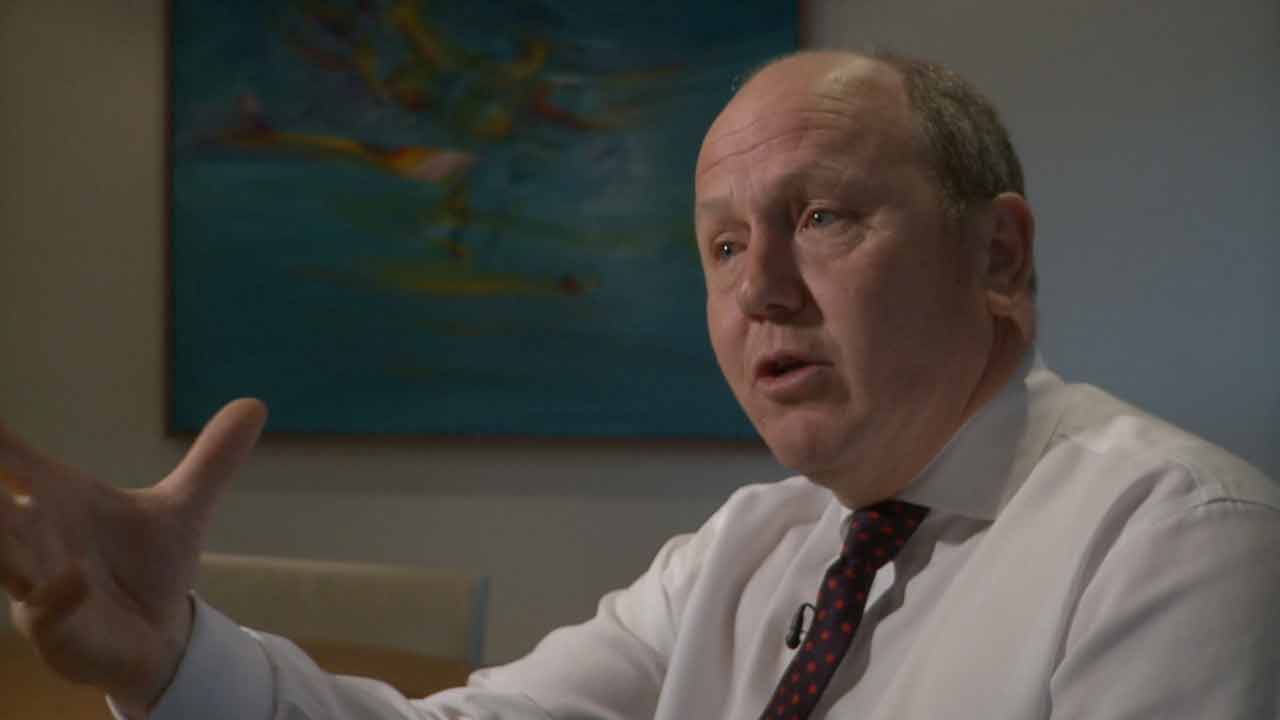
Play video
Watch the interview

About Patricia Davies

Despite recurring bouts of Bovine TB contracted from her uncle’s cows, Patricia Davies passed a fitness test to join the Women’s Royal Navy Service [WRN – AKA the Wrens] in 1942. She was 19 and was sent to Southmead House in Wimbledon to develop her linguistic skills. She benefitted from some schooling with German refugees.

She recalls that the Royal Navy repurposed various buildings for optimal radio coverage, including Scarborough racecourse. Patricia’s work, detailed from her base at a Lyme Regis golf club, involved intercepting German radio traffic. Though not the most thrilling location, she fondly recalls some enjoyable moments.

Her next post was at Abbots Cliff near Dover, a busier station closer to enemy lines. Patricia vividly remembers the buildup to D-Day and the moment she learned of the second front’s opening. Two weeks later, she turned 21, reflecting on the period’s innocence.

The war’s end was bittersweet for Patricia. While it was a time of great celebration, her father remained a POW in the Far East, with little information about his condition. Thankfully, he survived, allowing the family to move forward and Patricia to pursue a career in television. Meeting both Patricia and her sister Jean Argles was a privilege.

Credits

Interviewed by:
Martin Bisiker
Reviewed by:
Martin B

Transcripts:
Please note that transcripts and closed captions in the video player are automatically generated by Vimeo.

Copyright:
All video content, web site design, graphics, images (including submitted content), text, the selection and arrangement thereof, underlying source code, software and all other material on this Web site are the copyright of Legasee Educational Trust, and its affiliates, or their content and technology providers. ALL RIGHTS RESERVED. Any use of materials on this Web site – including reproduction for purposes other than those noted above, modification, distribution, or republication – without the prior written permission of Legasee Educational Trust is strictly prohibited.

Home | Veterans | Patricia Davies

A veteran interview with

Patricia Davies

Screenshot

Patricia Davies provides a great interview detailing her work as a Special Duties linguist in the WRNS.
Related topics & talking points

Keep on watching

More veteran stories...

Share this interview on:

https://www.legasee.org.uk/veteran/patricia-davies/

Cite this interview:

MLA Style:
Davies, Patricia. A Veteran Interview with Patricia Davies. Interview by Martin Bisiker. Legasee, 26 Jan. 2015 https://www.legasee.org.uk/veteran/patricia-davies/. Accessed 15 Jan. 2026.
APA Style:
Davies, P. (2015, January 26). A Veteran Interview with Patricia Davies [Interview by Martin Bisiker]. Legasee. Retrieved January 15, 2026, from https://www.legasee.org.uk/veteran/patricia-davies/
Chicago Style:
Davies, Patricia. 2015. A Veteran Interview with Patricia Davies. Interview by Martin Bisiker. Legasee, January 26. Accessed January 15, 2026. https://www.legasee.org.uk/veteran/patricia-davies/
Harvard Style:
Davies, P. (2015). A Veteran Interview with Patricia Davies. [Interviewed by Martin Bisiker]. Legasee, 26 January. Available at https://www.legasee.org.uk/veteran/patricia-davies/ (Accessed: 15 January 2026)
Vancouver Style:
Davies, P. A Veteran Interview with Patricia Davies [Internet]. Interview by M. Bisiker. Legasee; 2015 Jan 26 [cited 2026 Jan 15]. Available from: https://www.legasee.org.uk/veteran/patricia-davies/
An interview with

Jeff York

Far reaches and new challenges, Jeff York served as a Sonar operator during his underwater voyage aboard HMS Spartan in the Falklands War.

Jeff York offers a gripping tale of his service as a Sonar operator aboard HMS Spartan during the Falklands War. Raised in Northampton, Jeff grew up far from the sea. His first sample of seamanship began after becoming a member of the Sea Cadets. However, at the young age of sixteen, he received permission to enlist in the Royal Navy, seeing it as the natural course for his career. Even before his basic training, Jeff was determined to become a submariner, recalling a trip to Portsmouth where he went down in a submarine. From that moment, he was hooked. Once he was given the choice, he joined HMS Dolphin to do his submarine training. During this period, he served aboard ships from HMS Sceptre to HMS Aurora in the Mediterranean before being assigned to HMS Spartan, a new type of submarine which had a trial system implemented. During an exercise in the Bay of Biscay, the Ship's captain, Jim Taylor received an order to head for Gibraltar to make preparations for something. The young crew remained oblivious all throughout until Taylor revealed that they were preparing to join the Task Force in defending the Falklands from Argentinian rebels. HMS Spartan would become one of the first vessels to reach the islands. Jeff describes some of the ship's systems, including a dependable sonar which was used to locate enemy targets from a long range. He discusses the difficulties of being in unfamiliar waters, from the uncertainty of submarine combat to facing many navigational problems. The crew was not immune to a sense of confusion and vulnerability, feelings that increased after the loss of HMS Sheffield. Their unfamiliarity led to many precarious situations, including the ship getting trapped in a forest of kelp which jammed their systems. This posed a serious threat to the Spartan since it was fuelled by a nuclear power source. Despite these hardships, the crew managed to pull through, benefited by the strong comradery shared among everyone onboard. Jeff reflects on the overlooked contributions of submariners, taking pride in their obscurity whenever the topic of the  Falklands War is brought up in a conversation. His interview reveals their importance to the War effort as well as providing a glimpse into how submarine warfare changed during the period.
Service:
Interviewed by:
Martin Bisiker
Frame grab from an oral history interview of a British military veteran
An interview with

Pete Dunning

An incredible story of a Royal Marine who has had to overcome severe physical challenges after an incident in Afghanistan.

Pete Dunning shares with us his journey from being a bored pub worker in Wallesey to a medically discharged ‘meaningful Marine’ after being posted to Afghanistan twice with the Armoured Support Company during the mid-2000s. Pete recounts his gruelling training for the Royal Marines and how ‘exhilarating and exciting’ it was to operate the Viking armoured vehicles during his two tours in Afghanistan. In May 2008, Pete was involved in an incident where the vehicle he was travelling in hit an IED, resulting in the amputation of both of Pete’s legs. He spent over seven weeks at Selly Oak Hospital where he underwent surgery on his spine and received skin grafts for his severe burns before being sent to Hedley Court for rehabilitation. Pete talks about his ‘stubbornness to get back up from this’, and it was his sheer determination that helped him walk again. Despite opting for medical discharge from the Royal Marines just short of five years of service, he is now focused on watching his young family grow and thrive. His account of the incident and the changes it brought to his life is inspirational. A story of great determination to adapt to a life post-injury.
Service:
Interviewed by:
Martin Bisiker
An interview with

Dorothy Runnicles

Service:
Interviewed by:
Martin Bisiker