Home | Veterans | Neil Rostron
Neil-Rostron

A veteran interview with

Neil Rostron

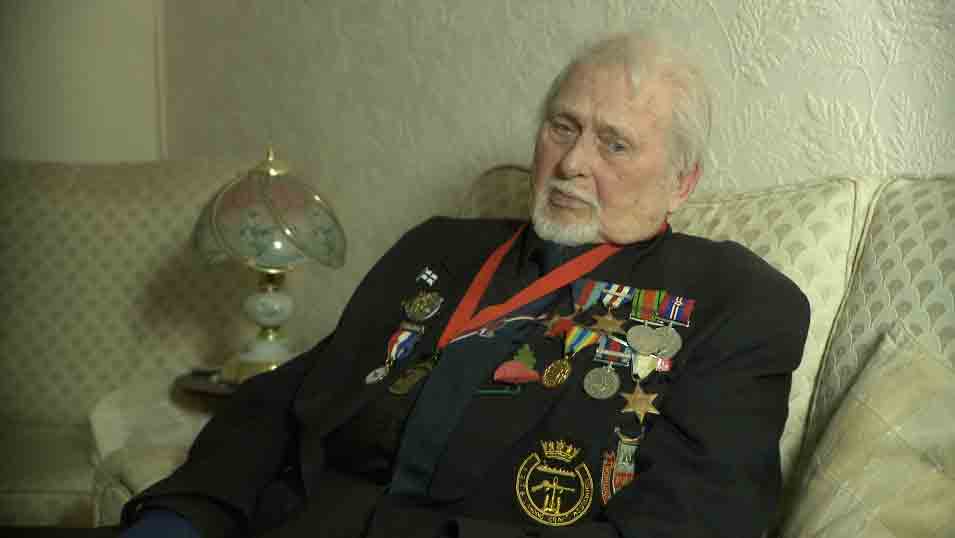
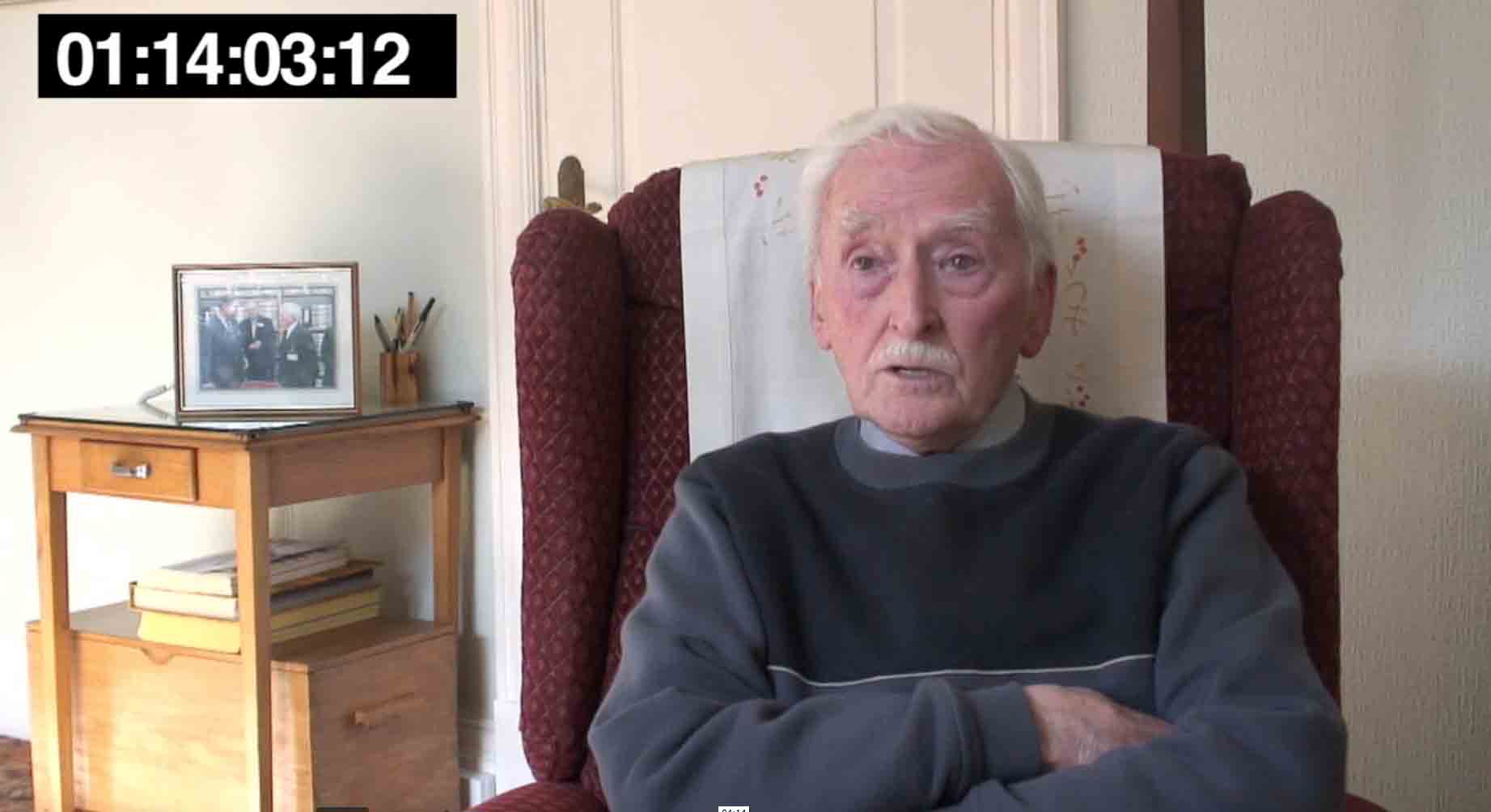
Neil Rostron was interviewed for a project Legasee conducted with Stoll who are a Veterans charity and Housing Association.
Video Coming Soon

About Neil Rostron

Credits

Interviewed by:
Sarah Beck

Transcripts:
Please note that transcripts and closed captions in the video player are automatically generated by Vimeo.

Copyright:
All video content, web site design, graphics, images (including submitted content), text, the selection and arrangement thereof, underlying source code, software and all other material on this Web site are the copyright of Legasee Educational Trust, and its affiliates, or their content and technology providers. ALL RIGHTS RESERVED. Any use of materials on this Web site – including reproduction for purposes other than those noted above, modification, distribution, or republication – without the prior written permission of Legasee Educational Trust is strictly prohibited.

Home | Veterans | Neil Rostron

A veteran interview with

Neil Rostron

Neil-Rostron

Neil Rostron was interviewed for a project Legasee conducted with Stoll who are a Veterans charity and Housing Association.
Related topics & talking points

Keep on watching

More veteran stories...

Share this interview on:

https://www.legasee.org.uk/veteran/neil-robron/

Cite this interview:

MLA Style:
Rostron, Neil. A Veteran Interview with Neil Rostron. Interview by Sarah Beck. Legasee, 22 Jul. 2014 https://www.legasee.org.uk/veteran/neil-robron/. Accessed 15 Nov. 2025.
APA Style:
Rostron, N. (2014, July 22). A Veteran Interview with Neil Rostron [Interview by Sarah Beck]. Legasee. Retrieved November 15, 2025, from https://www.legasee.org.uk/veteran/neil-robron/
Chicago Style:
Rostron, Neil. 2014. A Veteran Interview with Neil Rostron. Interview by Sarah Beck. Legasee, July 22. Accessed November 15, 2025. https://www.legasee.org.uk/veteran/neil-robron/
Harvard Style:
Rostron, N. (2014). A Veteran Interview with Neil Rostron. [Interviewed by Sarah Beck]. Legasee, 22 July. Available at https://www.legasee.org.uk/veteran/neil-robron/ (Accessed: 15 November 2025)
Vancouver Style:
Rostron, N. A Veteran Interview with Neil Rostron [Internet]. Interview by S. Beck. Legasee; 2014 Jul 22 [cited 2025 Nov 15]. Available from: https://www.legasee.org.uk/veteran/neil-robron/
An interview with

Tom Renouf

Black Watch infantryman who fought from 1st July to the end of the war, through France, Holland and Germany, winning a Military Medal on the Rhine crossing as a 19-yearold corporal.

Tom Renouf’s journey from infantry recruit to seasoned corporal with a Military Medal began with basic training and the preparations for deploying to France just after D-Day. On 30 June he joined his battalion as a casualty replacement, and went from boy to man during his baptism of fire at Rauray next day. Apart from a brief period recovering from a wound, he served continuously in the front line through France, Holland and the Rhine crossing to the final surrender in Germany. He focuses on some of the more personal aspects: how first battle experiences turned replacements into veterans, heavy casualties epitomised by the small number of soldiers who mustered next day, the different ways each man coped with danger. He recalls, during his first action in command, how he had to lead his section from the front to earn their respect. A recurrent theme is how the corporals, sergeants and sergeant major led from the front in battle and ensured the men’s welfare throughout the campaign.
Service:
Interviewed by:
Martin Bisiker
An interview with

Edward Redmond

Coming from a military family, Paddy describes his service as a Commando in the Far East, Middle East and Korea.

Having served in the Irish Army in 1943 to 44, ‘Paddy’ was discharged along with many of his compatriots, so he enlisted in the British Army. Even though he was Irish, on the advice of his father, he joined the Manchester regiment in Liverpool. From there, Paddy volunteered to join the Commandos and transferred to Achnacarry in Scotland in 1944. Although the training was gruelling, he succeeded and was proud to achieve his beret. Transferring to Wrexham in 1945, he was selected for special training and then posted to the Far East, training for Operation Nipper. Surrender following the second atom bomb resulted in redirection to the Malacca Straits and from there to the Middle East. Paddy describes serving in Egypt and then Israel and then in 1948, being posted to London, where he was on guard during the night of King Charles’s birth. Subsequently posted again to the Far East, it was in 1949 that he was sent to Korea. He tells of many battles and experiences including Operation Rowley, the taking and loss of Pyongyang and Kunu-ri. Paddy is critical of the behaviour of the American Military in Korea. Ultimately, Paddy expresses the view that war is futile.
Photo Gallery icon 2 Photos
Service:
Interviewed by:
Martin Bisiker
An interview with

Colin Parker

A Coldstream Guard trained to feel invincible has a near death experience in the Middle East and suffers devastating PTSD.

Collin Parker details his experience with PTSD as well as his tragic fall from invincible Coldstream Guard to being left for dead in the Middle East. Slaving away day after day at his foundry job pushed Collin to actualise his childhood infatuation with the Armed Forces and join the Coldstream Guards. This particular regiment had a violent and prideful reputation due to moulding their recruits to feel like nothing could hurt them, something Collin experienced first hand.  Collin initially found it exciting to be on the battlefield until he was surrounded by Middle Eastern tribals and gravely injured by their mortar fire, the two teenagers soldiers under his command at the time not making it. Laying in the crater thinking about his family one last time Collin was fully convinced he had died but miraculously he survived.  After the attack Collin had to relearn how to walk and talk and was then medically discharged and forced to deal with his new found PTSD alone. Having to accept that the army viewed him as expendable was extremely difficult for Collin; he felt so small and powerless after being discharged, he had lost everything and they did not care. Due to the way the Coldstream Guard trained him Collin never believed he would suffer from PTSD but now he was stuck constantly relieving the stress and fear from that day over and over. 
Service:
Interviewed by:
Martin Bisiker