Home | Veterans | Joyce Aylard
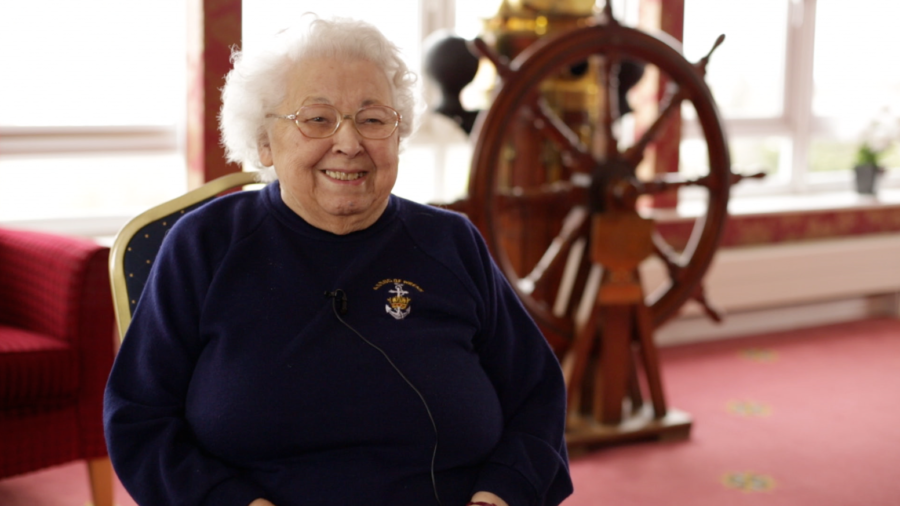
joy-aylard - portrait in action

A veteran interview with

Joyce Aylard

Joyce Aylard was stationed at HMS Pembroke V in North London where she worked on the bombe codebreaker machines trying to decode German Enigma…

Play video
Watch the interview

About Joyce Aylard

When war broke out, 14-year-old Joy Aylard was evacuated to the countryside for two happy years, before leaving school and returning to London to study at college until she was old enough to join up. As soon as she could, she joined the WRNS and was almost immediately sent to Bletchley Park’s Eastcote Outstation.

Joy describes in detail the top-secret work involved in operating the Bombe machines to decipher German Enigma messages, remembering the boost to morale that came when successful results of their codebreaking efforts were filtered back to them. Reflecting on the intense secrecy surrounding the work, Joy explains that everyone just got used to not talking about what they were doing; not even Joy’s father knew what her job entailed!

Joy’s reflections on her time during the war allow us a vivid glimpse into life behind the walls at Bletchley Park, and the technical skill, dedication and discretion of all who worked there and played such a pivotal role in the Allied war effort.

Credits

Interviewed by:
Martin Bisiker
Reviewed by:
Caroline Barratt

Transcripts:
Please note that transcripts and closed captions in the video player are automatically generated by Vimeo.

Copyright:
All video content, web site design, graphics, images (including submitted content), text, the selection and arrangement thereof, underlying source code, software and all other material on this Web site are the copyright of Legasee Educational Trust, and its affiliates, or their content and technology providers. ALL RIGHTS RESERVED. Any use of materials on this Web site – including reproduction for purposes other than those noted above, modification, distribution, or republication – without the prior written permission of Legasee Educational Trust is strictly prohibited.

Home | Veterans | Joyce Aylard

A veteran interview with

Joyce Aylard

joy-aylard - portrait in action

Joyce Aylard was stationed at HMS Pembroke V in North London where she worked on the bombe codebreaker machines trying to decode German Enigma…

Related topics & talking points

Veteran gallery

Photos & memories

Keep on watching

More veteran stories...

Share this interview on:

https://www.legasee.org.uk/veteran/joyce-aylard/

Cite this interview:

MLA Style:
Aylard, Joyce. A Veteran Interview with Joyce Aylard. Interview by Martin Bisiker. Legasee, 14 Dec. 2014 https://www.legasee.org.uk/veteran/joyce-aylard/. Accessed 23 Jan. 2026.
APA Style:
Aylard, J. (2014, December 14). A Veteran Interview with Joyce Aylard [Interview by Martin Bisiker]. Legasee. Retrieved January 23, 2026, from https://www.legasee.org.uk/veteran/joyce-aylard/
Chicago Style:
Aylard, Joyce. 2014. A Veteran Interview with Joyce Aylard. Interview by Martin Bisiker. Legasee, December 14. Accessed January 23, 2026. https://www.legasee.org.uk/veteran/joyce-aylard/
Harvard Style:
Aylard, J. (2014). A Veteran Interview with Joyce Aylard. [Interviewed by Martin Bisiker]. Legasee, 14 December. Available at https://www.legasee.org.uk/veteran/joyce-aylard/ (Accessed: 23 January 2026)
Vancouver Style:
Aylard, J. A Veteran Interview with Joyce Aylard [Internet]. Interview by M. Bisiker. Legasee; 2014 Dec 14 [cited 2026 Jan 23]. Available from: https://www.legasee.org.uk/veteran/joyce-aylard/
An interview with

Jeff York

Far reaches and new challenges, Jeff York served as a Sonar operator during his underwater voyage aboard HMS Spartan in the Falklands War.

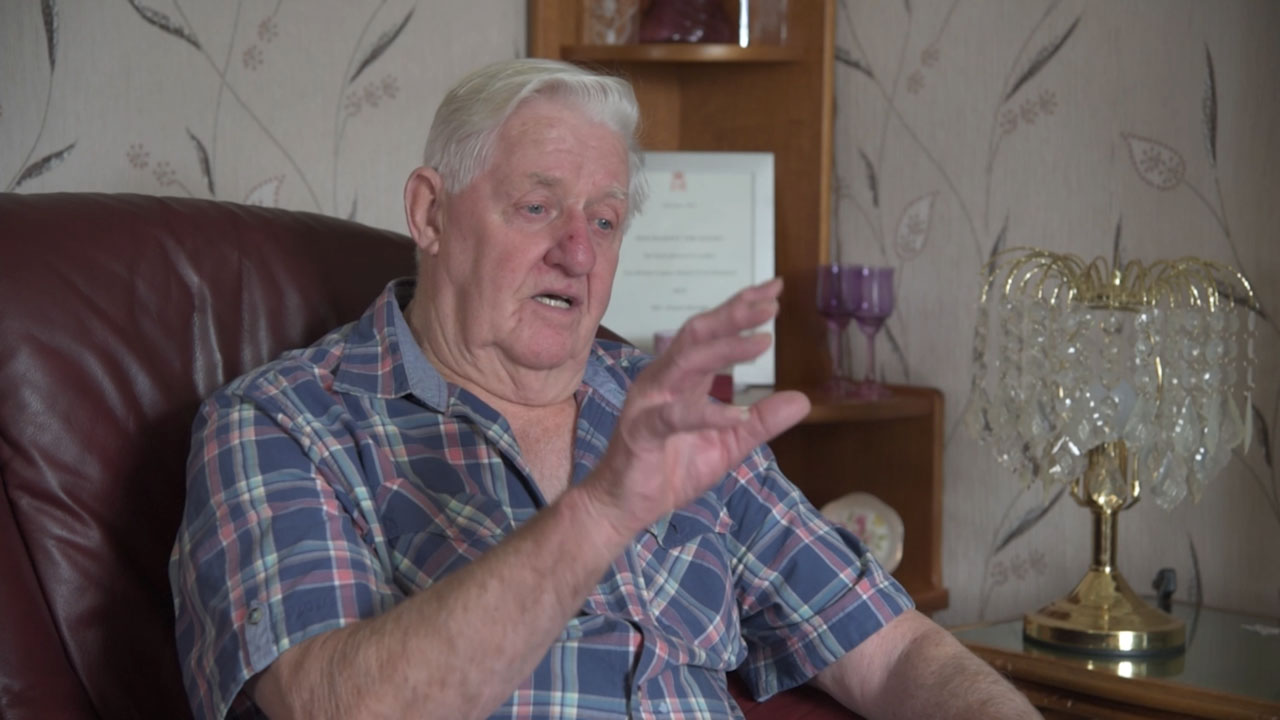
Jeff York offers a gripping tale of his service as a Sonar operator aboard HMS Spartan during the Falklands War. Raised in Northampton, Jeff grew up far from the sea. His first sample of seamanship began after becoming a member of the Sea Cadets. However, at the young age of sixteen, he received permission to enlist in the Royal Navy, seeing it as the natural course for his career. Even before his basic training, Jeff was determined to become a submariner, recalling a trip to Portsmouth where he went down in a submarine. From that moment, he was hooked. Once he was given the choice, he joined HMS Dolphin to do his submarine training. During this period, he served aboard ships from HMS Sceptre to HMS Aurora in the Mediterranean before being assigned to HMS Spartan, a new type of submarine which had a trial system implemented. During an exercise in the Bay of Biscay, the Ship's captain, Jim Taylor received an order to head for Gibraltar to make preparations for something. The young crew remained oblivious all throughout until Taylor revealed that they were preparing to join the Task Force in defending the Falklands from Argentinian rebels. HMS Spartan would become one of the first vessels to reach the islands. Jeff describes some of the ship's systems, including a dependable sonar which was used to locate enemy targets from a long range. He discusses the difficulties of being in unfamiliar waters, from the uncertainty of submarine combat to facing many navigational problems. The crew was not immune to a sense of confusion and vulnerability, feelings that increased after the loss of HMS Sheffield. Their unfamiliarity led to many precarious situations, including the ship getting trapped in a forest of kelp which jammed their systems. This posed a serious threat to the Spartan since it was fuelled by a nuclear power source. Despite these hardships, the crew managed to pull through, benefited by the strong comradery shared among everyone onboard. Jeff reflects on the overlooked contributions of submariners, taking pride in their obscurity whenever the topic of the  Falklands War is brought up in a conversation. His interview reveals their importance to the War effort as well as providing a glimpse into how submarine warfare changed during the period.
Service:
Interviewed by:
Martin Bisiker
An interview with

Stan Hoare

The eventful naval service of a radar rating during World War II.

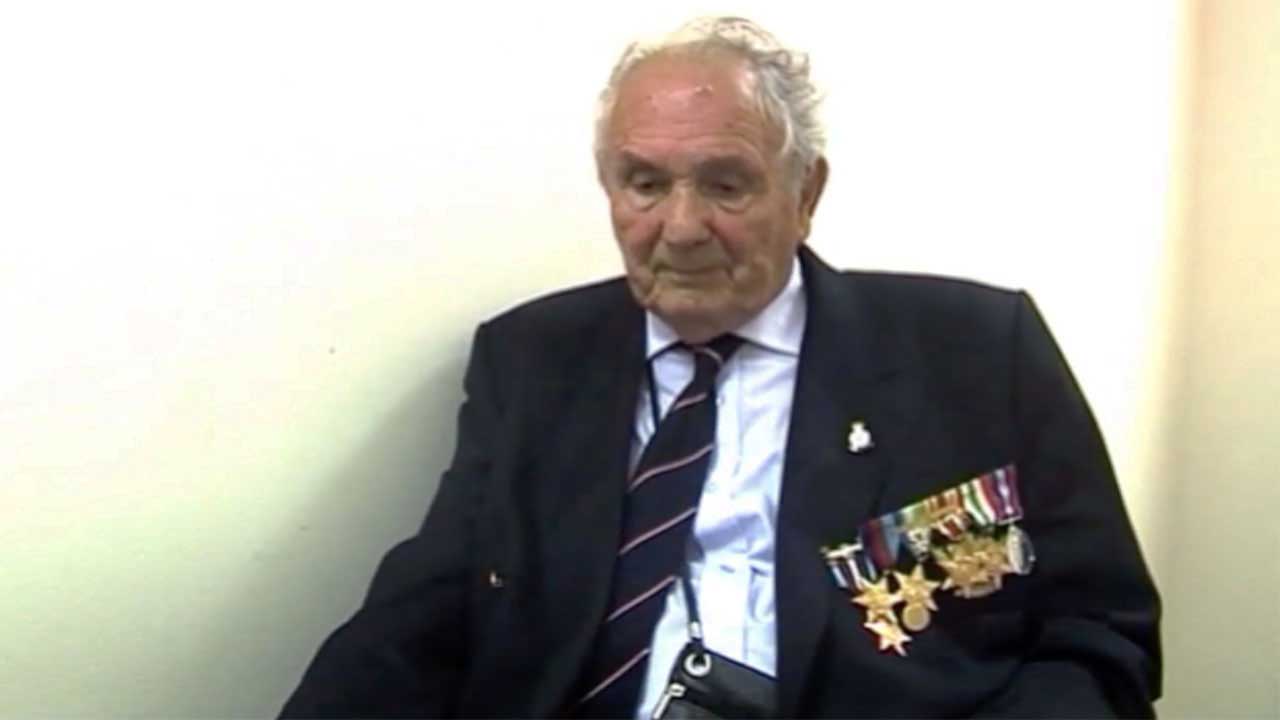
Office boy Stan Hoare was called up in June 1943 and he joined the Royal Navy as a radar rating, completing his training at HMS Raleigh in Cornwall and on the Isle of Man. Stan’s first ship was HMS Hart, a modified Black Swan-class sloop, and he recalls the sense of pride he felt when boarding for the first time. He shares memories of his life and work on board the ship during sea trials, the Arctic convoys and D-Day, and remembers the serious consequences of an accident caused by heavy fog in the Bristol Channel during his watch. Stan went on to take a gunnery course and was subsequently transferred to HMS Duke of York, joining the British Pacific Fleet and setting sail for Australia. He vividly describes the differences between the two ships of his service, and remembers the final crashing wave that spared his life but ended his military career. Stan’s story, shared with much humour and humility, illustrates the overwhelming courage, dedication and resilience of all those who served with, before and after him.
Service:
Interviewed by:
Martin Bisiker
An interview with

Tim MacMahon

Unique account of the Falklands war by Helicopter pilot assigned to HMS Antelope

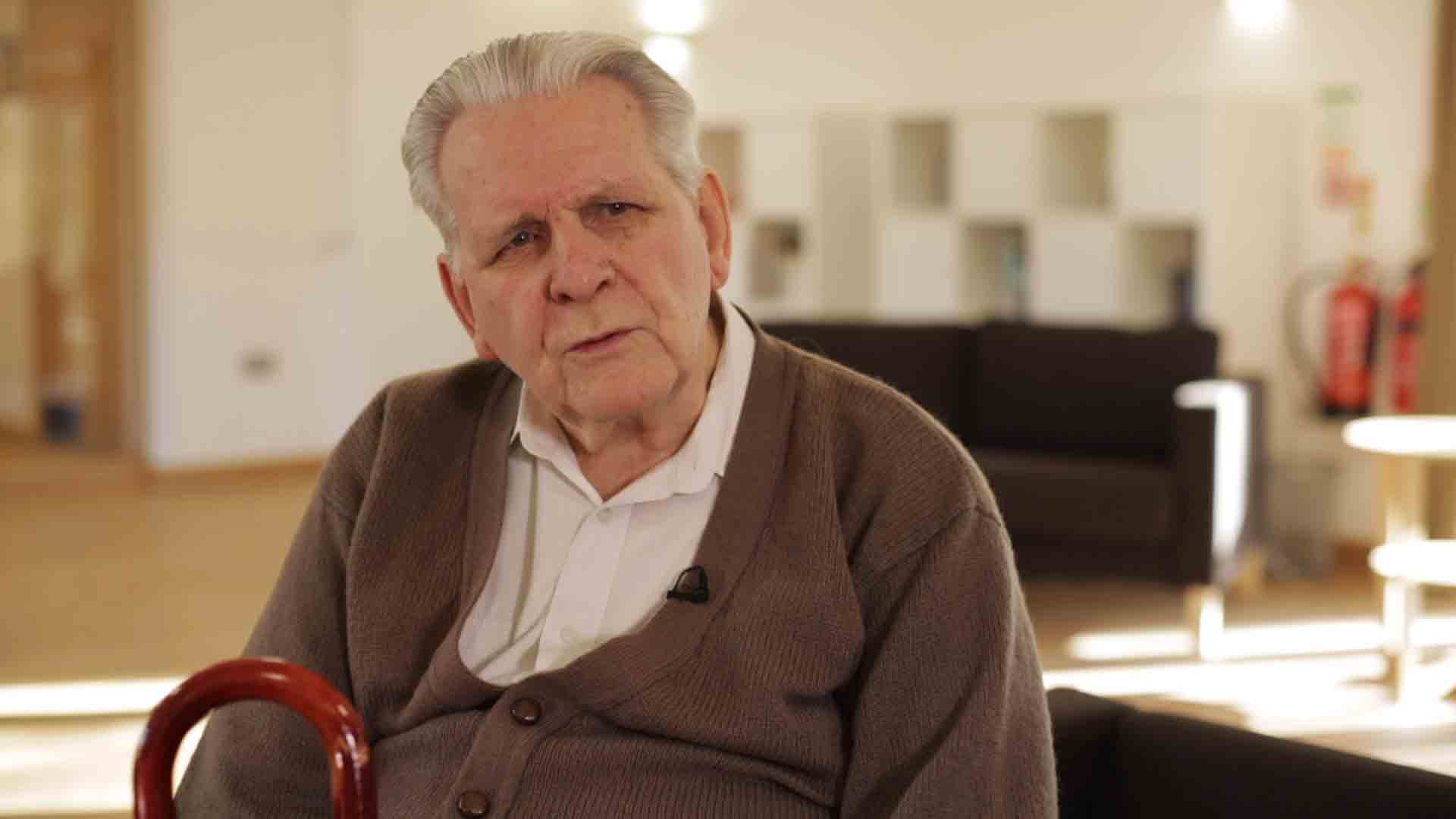
Tim Macmahon, was Flight Commander and pilot of a Lynx helicopter aboard HMS Antelope during the Falklands War. He recalls his sudden deployment to the South Atlantic in April 1982 where initially he performed routine duties including transporting the Argentinian POW Alfredo Astiz and British Antarctic Survey members.  The mood shifted after the sinking of the Belgrano and HMS Sheffield, leading to a mission on May 23rd, where Tim and his crew fired Skua missiles at an enemy supply ship. While away, HMS Antelope was severely damaged by bombs. Tim evacuated casualties and assisted bomb disposal efforts by hovering with floodlights above the ship. He returned to the UK onboard the QE2. Reflecting on the war, Tim shares experiences of refuelling without modern technology and the emotional weight of attacking an Argentine carrier once crewed by his father.
Photo Gallery icon 1 Photo
Service:
Interviewed by:
Martin Bisiker